How to Convert MP4 to Text in 2026 (Free, Fast, and Accurate)

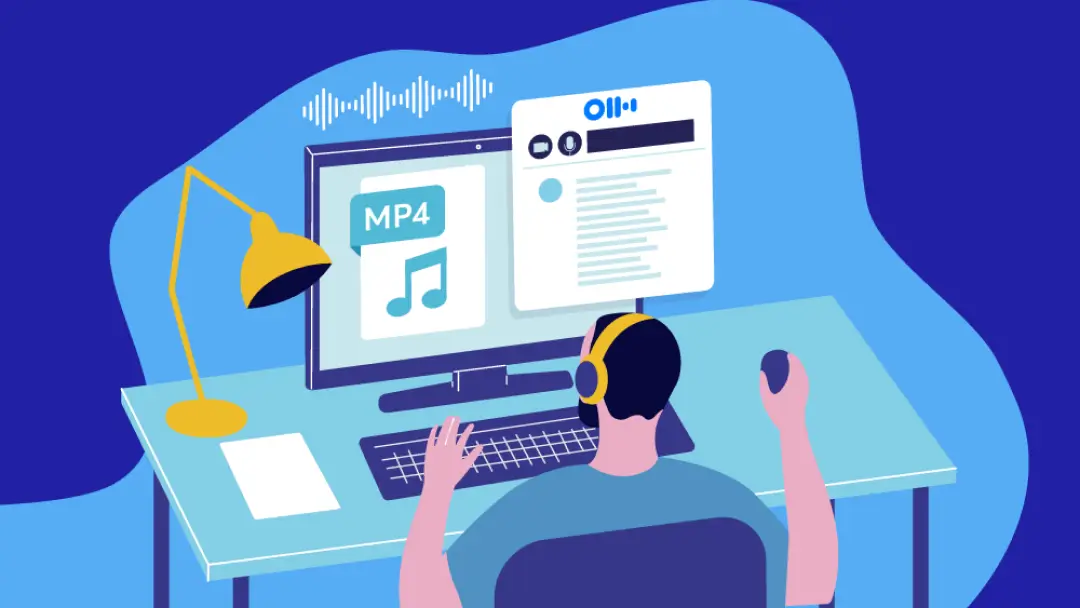


Every recorded webinar, customer interview, lecture, and panel ends up the same way: an MP4 file in a folder. The information inside is hard to search or quote.
MP4 to text conversion fixes that because the AI tool pulls the audio track from your video file and turns it into an editable, searchable transcript, usually in a few minutes. From there, the transcript becomes captions, a blog post, meeting summaries, or a record you can query months later. The right method depends on the recording, the cleanup time you can afford, and the format you need at the end.
The Short on Time Version
- MP4 to text conversion turns a video's audio track into a searchable, editable transcript, and AI tools can finish the job quickly.
- An AI notetaker and Conversation Intelligence Platform like Otter.ai handles import, editing, export, and searchable conversation records in five steps, while YouTube auto-captions and manual transcription trade away control or time.
- Clean audio and a quick proofread do most of the work. Crosstalk and unfamiliar names usually need extra attention.
- Captions widen your audience in silent environments and support accessibility, since nearly 2.5 billion people may have some hearing loss by 2050.
What Is MP4 to Text Conversion?
MP4 to text conversion is the process of extracting the spoken audio from an MP4 video file and rendering it as written text. An MP4 is a container format that holds both a video stream and an audio stream in a single file. That structure lets it compress well without a visible drop in quality, which is why it became the default for webinars, screen recordings, and streamed video.
Because the audio lives on its own track inside that container, AI notetakers and other speech-to-text systems can read it directly without touching the picture. A screen recording and a high-resolution interview transcribe the same way, and you do not need to extract the audio before uploading.
Why Convert MP4 to Text?
A transcript turns a locked video file into something your team, your tools, and your audience can actually use:
- Searchable and quotable: Once transcribed, the words inside a recording become easy to search, quote, and reuse.
- AI-ready: A transcript feeds directly into MCP-connected assistants like Claude and ChatGPT, which can read the text bi-directionally and return any custom insight you ask for.
- Accessible: By 2050, nearly 2.5 billion people will have some degree of hearing loss (roughly 1 in 4), and over 700 million will experience disabling hearing loss.
- Silent-friendly: Captions help viewers in silent environments who cannot turn on sound.
Convert MP4 to Text With Otter.ai (Step by Step)
Otter.ai is an AI notetaker and Conversation Intelligence Platform that can also turn uploaded audio and video files into conversation records: searchable transcripts, summaries, speaker attribution, action items, and answers your team can return to later.
Otter currently supports English, Spanish, French, German, Chinese, and Japanese which cover the languages most teams record in. Otter also works bidirectionally with Claude and ChatGPT through MCP. You can ask Claude or ChatGPT to pull any insight you want from a transcript, like key decisions or action items. And it works in reverse too: Otter AI Chat can send meeting intelligence straight into the other apps you already use.
The platform imports your file and turns it into a transcript you can edit and export in five steps.
Step 1: Import Your MP4 File
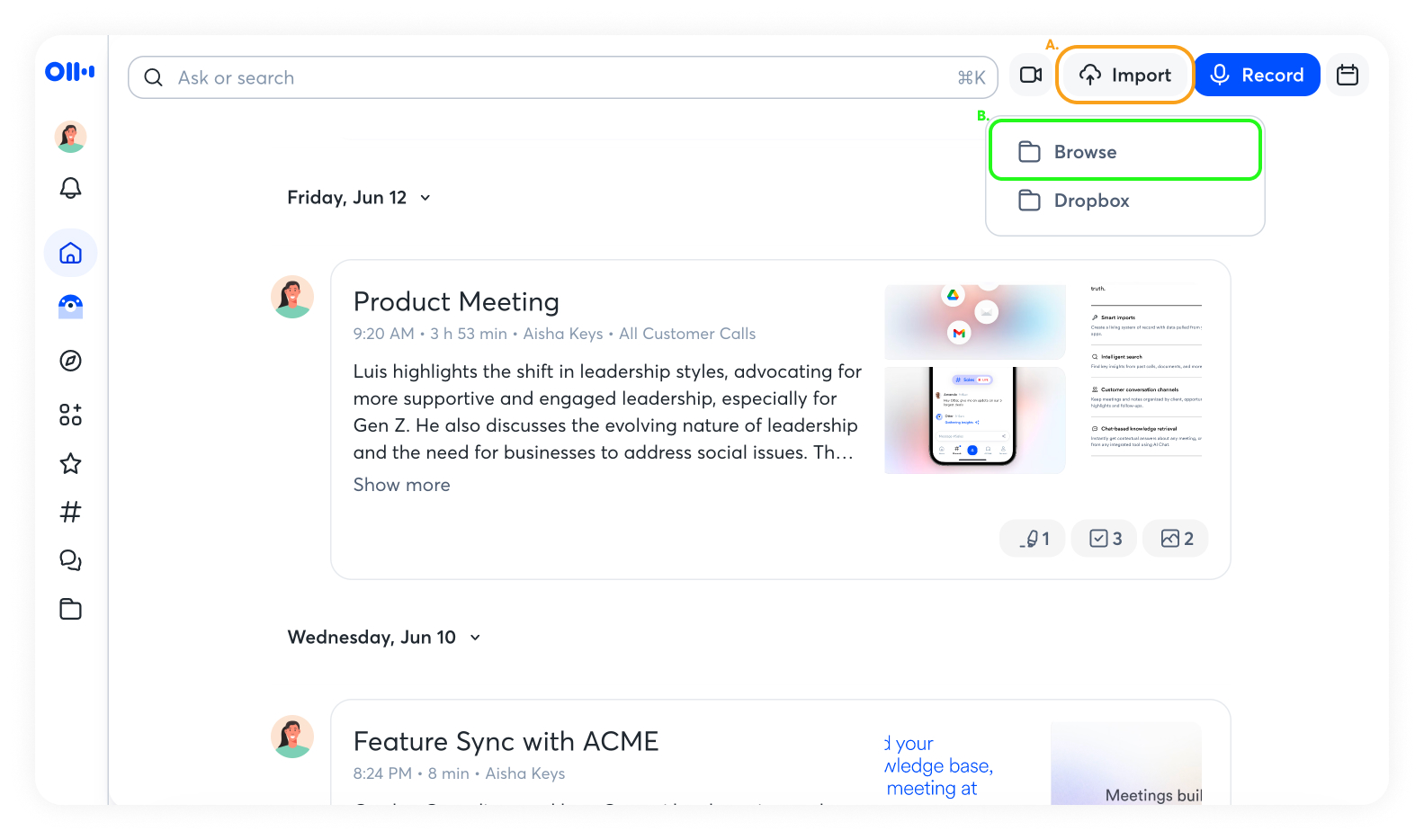
On the Otter homepage, click Import in the upper right and select Browse to choose the MP4 you want to convert. You can also drag and drop one or more supported files straight into Otter to import them, with each file uploading and processing independently.
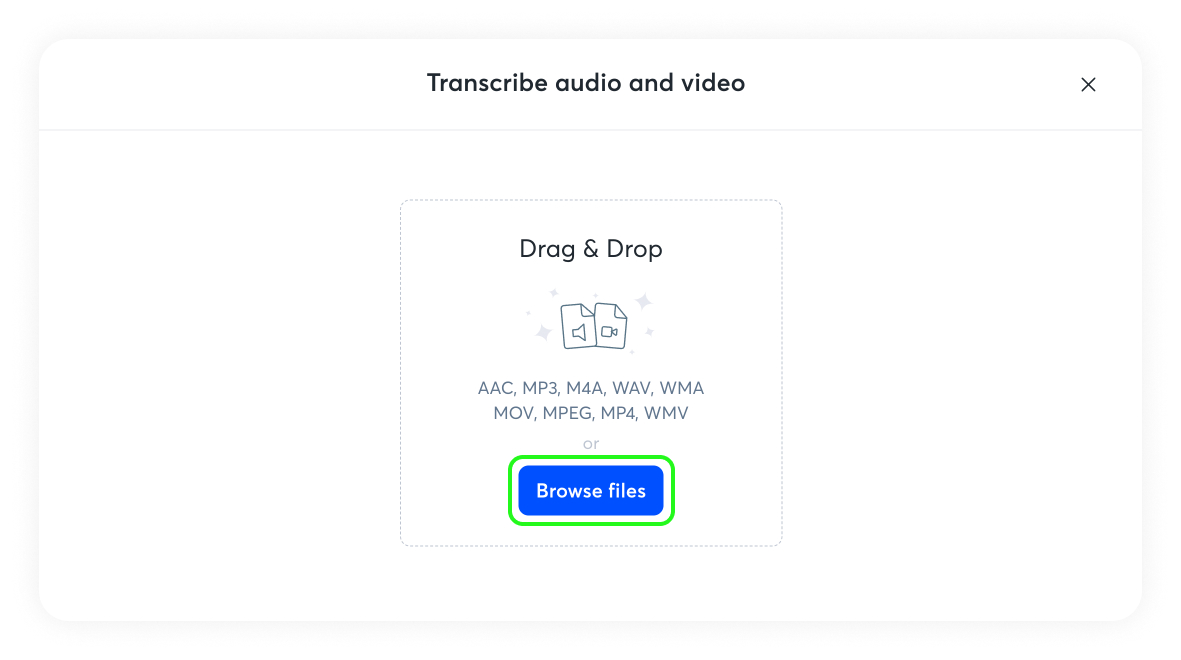
Otter accepts audio and video files up to 5 GB, including other common formats like MP3 and WAV, so the same workflow covers audio-only recordings too.
Step 2: Let the Transcription Run
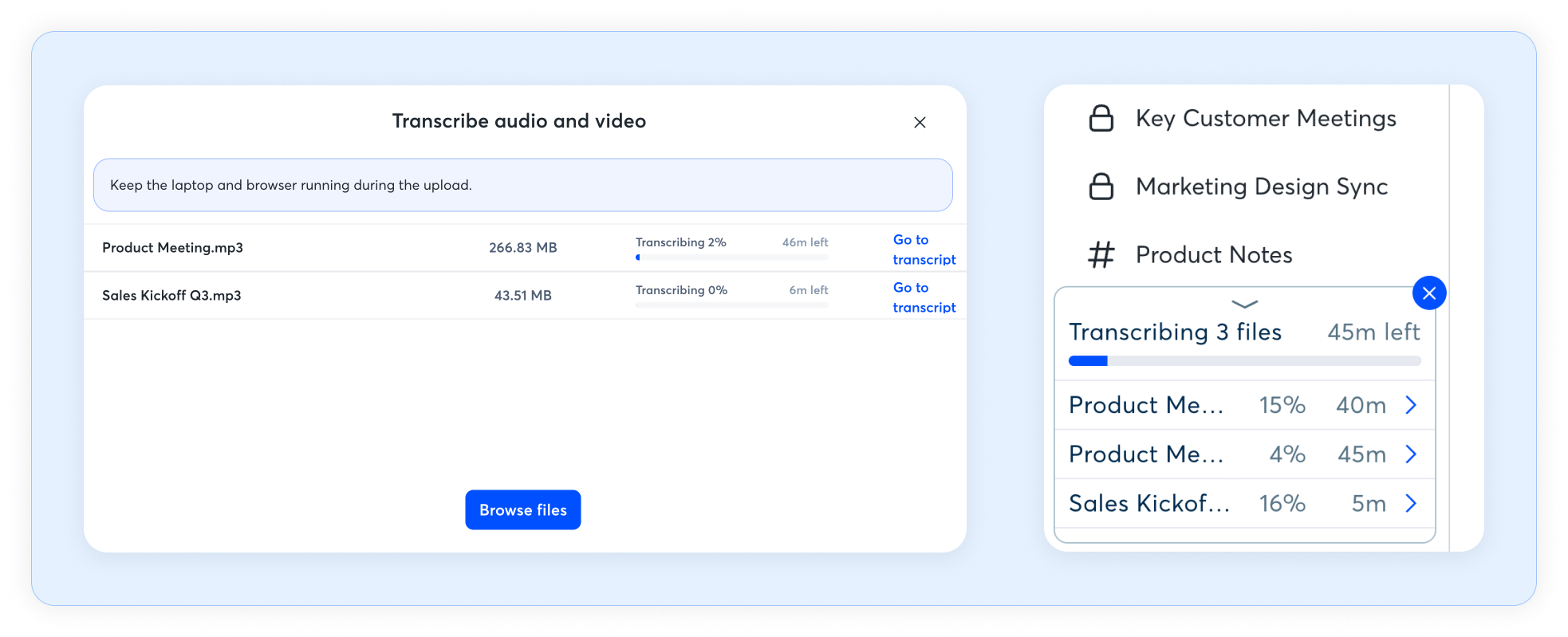
Processing time depends on file length and can take up to the duration of the file itself. Progress appears on screen while Otter uploads and transcribes the recording. Once processing finishes, Otter automatically generates AI-powered meeting notes for the file, including a summary, action items, and (when available) an outline. If you started the import from the Otter mobile app, you'll get a notification when the transcript is ready.
Step 3: Edit the Transcript
Open the transcript and use the Edit option to correct any misheard words, then save your changes by clicking on the “Done” button. A search bar lets you jump to any keyword in the file, and keyboard shortcuts help speed up longer edits. For terms Otter mis-hears repeatedly (names, acronyms, product terms), add them to your account's custom vocabulary so future imports transcribe them correctly.
Step 4: Share With Your Team
To collaborate, open the share options on the transcript and add teammates by name or email, share with a group, or share the transcript by link. Alongside sharing, each transcript surfaces context that makes collaboration easier:
- Date and time of the transcription
- Duration of the video file
- A summary of keywords
- The number of speakers and their share of the conversation
Step 5: Export in the Format You Need
When you’re done, select Export and pick the file format you need. You can choose what metadata to include, such as speaker names and timestamps, depending on whether the file is headed for a subtitle track or a document. For sales calls, interviews, or research sessions, you can also build a custom template to extract any insight you care about, such as a budget number, a next step, a competitor mention, or a stakeholder name. From there, push it through MCP into Claude, ChatGPT, or any app of your choice.
Method 2: Use YouTube Auto-Captions
Upload your MP4 to YouTube (unlisted, if the content is private) and download the auto-generated captions. It's free, but the trade-offs stack up quickly for anything beyond a casual, public-facing video:
- No control over the model: You cannot set custom vocabulary, correct speaker labels, or train the system on names, acronyms, or product terms your calls actually use.
- Limited export formats: You're stuck with what YouTube offers, so you cannot pull a clean DOCX for a report or a structured file for downstream tools.
- Mandatory cleanup pass: Auto-generated captions must be edited for grammar, punctuation, spelling, and missing sounds before they meet minimum accessibility standards for pre-recorded media.
- No speaker attribution: YouTube outputs a single caption stream, so multi-person meetings, interviews, and panels arrive as one unlabeled block of text.
- Privacy exposure: Every file has to live on Google's servers, even if marked unlisted, which rules the method out for sensitive customer, HR, or legal recordings.
- No AI layer on top: The output is a caption file only. You cannot ask questions of it, pipe it into Claude or ChatGPT through MCP, or extract custom insights like budget, next steps, or competitor mentions.
For a one-off public video where rough captions are enough, YouTube gets the job done. For meetings, sales calls, interviews, webinars, or anything a team will search and reuse later, an AI workflow like Otter is built for the job.
Ways to Use Your MP4 Transcript
A single conversion can support several downstream assets:
- Add subtitles to the video: Export the transcript as SRT (or VTT) and drop it into your video editor or upload it alongside the file.
- Publish it as a text description: Attach the transcript to the video upload so viewers and search engines can read what's inside.
- Repurpose it into new content: Turn the transcript into a blog post, social quotes, an email digest, or meeting summaries.
- Feed it to an AI assistant: Pipe the transcript into Claude or ChatGPT through MCP to pull structured insights, summaries, or action items on demand.
A one-hour webinar can become several useful assets from a single conversion.
What to Look for in an MP4 to Text Converter
Beyond accuracy and export options, make sure the tool works for your real recordings:
- Speaker recognition and file size limits: Without speaker recognition, a multi-person recording becomes an unlabeled wall of text. Large webinar recordings can fail if they exceed upload caps, so confirm your longest recordings fit before you commit.
- Language coverage: Confirm the tool supports the languages your team records in. Otter focuses on English, Spanish,French, German, Chinese, and Japanese, which covers most business recordings; if your files are primarily in another language, factor that into your choice.
- Custom insight extraction and MCP support: Look for tools that let you build custom templates to pull any insight you care about out of a call and connect bi-directionally with assistants like Claude and ChatGPT through MCP, so the extracted data can flow into whatever app you already work in.
- Privacy and permissions: Treat the security of uploaded files as a standalone consideration. Look for encryption and a published data retention policy. Ask whether your uploads train the vendor's models, and make sure you have permission from participants before recording or uploading a call.
These checks help you avoid a converter that works in a quick test but fails mid-project.
Which Export Format Fits Your Use Case?
Most transcription workflows revolve around five common formats, each with a distinct job:
- TXT: Plain text with no formatting, best for pasting into documents or feeding other tools.
- DOCX: An editable Word document, useful when the transcript needs review, comments, or formatting.
- PDF: A fixed-layout file for records, legal documentation, or distribution.
- SRT: A widely supported subtitle format for video editors and social platforms.
- VTT: A caption format commonly used in web video and streaming players.
Choosing the format before you export keeps the transcript usable in the next tool, whether that's a document editor, a video platform, or an MCP-connected assistant that reads the transcript and returns structured insights.
When to Use SRT vs. VTT
Both are timed caption files. Choose based on where the captions will live. SRT is widely supported across video editors and social platforms. VTT is commonly used for web caption workflows and HTML5 players. If your video lives on a website or streaming player, export VTT; for everything else, SRT is the safer default.
Convert Your MP4 to Text Today
Manual transcription still has a place for short or highly sensitive clips. YouTube auto-captions can work if you have time to clean them up. For longer recordings and anything a team will search or reuse later, an AI workflow tends to move faster and produces a conversation record you can query, feed into Claude or ChatGPT through MCP, or route into any downstream app.
Try Otter on your next MP4 and get your first 300 minutes free. Try it free or get a demo to see how Otter handles transcription across a whole team.
Frequently Asked Questions About MP4 to Text Conversion
Can you transcribe an MP4 file?
Yes. AI notetakers like Otter can transcribe an MP4: import the file, wait for the transcript to process, then edit and export it as TXT, DOCX, SRT, or another supported format.
How do I convert MP4 to text for free?
You have three free options: upload the file to Otter's free plan, upload it to YouTube (unlisted) and download the auto-captions, or type the transcript yourself. Otter's free plan tends to be the quickest of the three and keeps the transcript editable and searchable.
How long does MP4 to text conversion take?
Short files often process in minutes; longer files take more time, but AI transcription is usually much faster than manual typing.
How do you transcribe a video call?
Start by recording the call with permission from participants. Our guide on how to record a Google Meet call walks through the platform-specific steps. Once you have the file, import the MP4 (or the audio file) into an AI notetaker like Otter. Processing time depends on call length, but a one-hour call is typically ready to edit and export within a few minutes. From there, you can build a custom template to extract any insight from the call and push it through MCP into Claude, ChatGPT, or another app your team already uses.
Does video resolution affect transcription quality?
No. Speech-to-text systems read the audio track, not the picture, so a low-resolution recording with clean audio transcribes better than a high-resolution file with a noisy soundtrack. You also do not need to extract the audio before uploading.
Related posts