Everything You Need to Know is Already in Your Meetings. Otter Puts it to Work.


Most HR teams are sitting on a goldmine they can’t access. Every interview, every debrief, every
team sync, every all-hands. These conversations contain decisions, themes, and signals that shape organizations. But without a way to capture and connect them, that intelligence disappears the moment the call ends.
Otter changes that. As the single conversational source of truth for teams, it captures and summarizes workplace conversations across the full function, from hiring to leadership. This helps teams reduce admin overhead, accelerate work, and build the kind of organizational memory that grows smarter over time. Here’s how:
1. Standardizing the Interview Process and Improving Candidate Experience
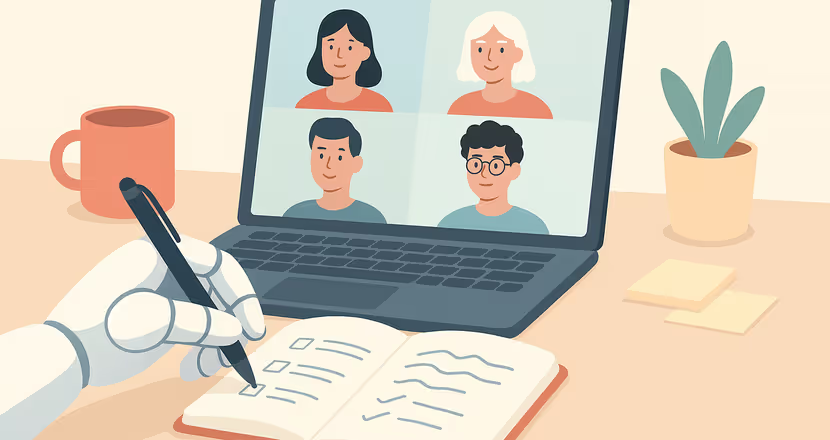
When Otter records an interview, the interviewer is freed from the cognitive burden of simultaneous note-taking and listening. They show up more present, ask sharper questions, and give candidates a meaningfully better experience. And the structured insights Otter generates include summaries, key moments, and action items which create consistent documentation across every hiring conversation, regardless of who conducted it.
And then the post-interview admin, like scorecard completion, feedback synthesis, and follow-up summaries, all gets automated. That removes the documentation burden from your recruiting team and ensures that insights are captured accurately, not reconstructed from memory hours later.
2. Conversation Intelligence That Reduces Risk and Surfaces Hiring Trends
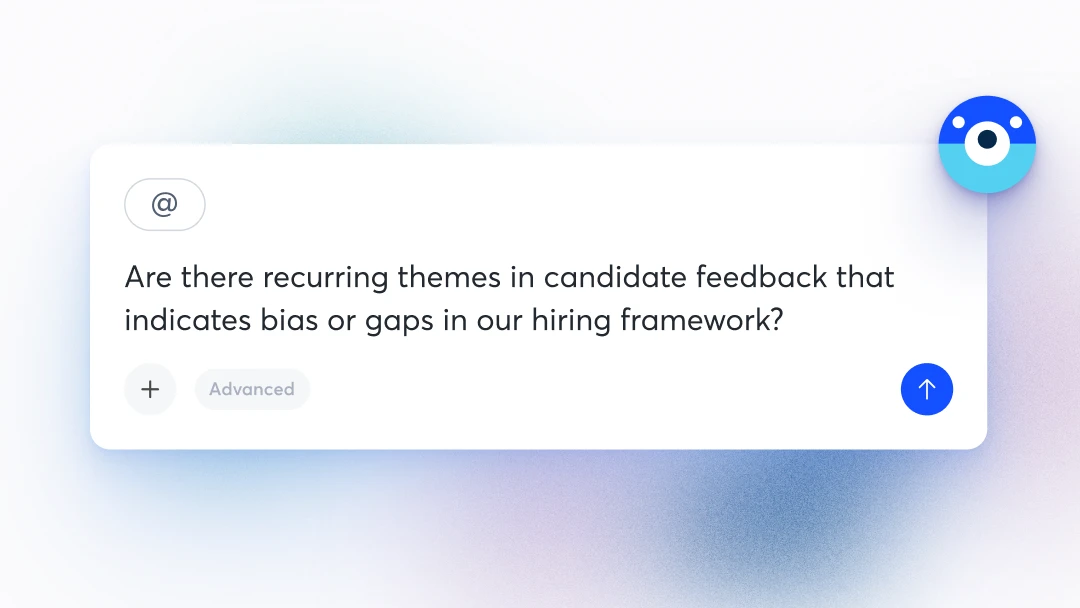
Using Otter to store interview and debrief conversations in dedicated channels over time creates something genuinely powerful: a searchable body of hiring intelligence. People leaders can use Otter AI Chat to surface structured insights across that collection. For example:
- How leveling decisions are actually being made and whether they’re consistent
- Where bias is showing up in evaluator language and feedback
- Whether interviewers are applying a shared framework or improvising
- What distinguishes high-confidence hiring decisions from uncertain ones
In one real-world example, the People team from Otter, trailing on hiring goals for several consecutive quarters on a highly competitive technical function, used Otter to capture and store every debrief from a focused recruiting push. After accumulating statistically significant data, they used prompt-based queries to analyze the conversations, which surfaced gaps in the hiring teams’ hiring framework, identified decision-making patterns, and pinpointed where the process was breaking down. The result was immediate, objective, and actionable.
But there’s a quality dimension here too. When hiring conversations are captured, evaluators are naturally more deliberate and accountable. This reduces the risk of legally problematic language and elevates the overall quality of decision-making. Otter doesn’t just document conversations, it helps teams have better ones.
3. A Single Source of Truth Across Every Team Meeting
HR teams are expected to operate across an impossibly wide surface area. Otter works seamlessly with Zoom, Microsoft Teams, and Google Meet. So wherever your organization holds its conversations, every meeting becomes part of a living, searchable organizational memory.
That means structured, searchable insight flowing in from every recurring touchpoint:
- Department and All-hands meetings
- Leadership team syncs and executive operating reviews
- OKR planning, quarterly reviews, and retrospectives
- Cross-functional working sessions and decision forums
So when decisions, themes, and action items are automatically surfaced, HR teams spend less time chasing context and more time driving outcomes. What was decided in last quarter’s leadership offsite? What themes keep surfacing in team retrospectives? Otter makes those answers accessible and actionable.
4. Building CHROs Into More Strategic Business Partners
For senior People leaders operating at the executive level, Otter functions as a pattern recognition engine. Rather than relying on observation alone to identify cultural friction, leadership gaps, or decision-making dysfunction, a CHRO can return to a body of captured conversations and query them directly: Are we revisiting the same issues again and again? Whose voice is missing? Are we making decisions or just discussing them?
The difference between a gut-based observation and a data-backed insight is credibility, and this is especially true when influencing highly technical or analytical executive teams. Otter gives People leaders fact-based intelligence they can bring to the table, transforming their role from reactive support function to proactive strategic enabler.
The more conversations you capture with Otter, the greater your organizational memory becomes. It grows with your team and creates a compounding asset that gets more valuable with every meeting.
5. The Framework: Capture, Synthesize, Act
The same core workflow sits underneath all of this: capture the conversation, synthesize it into structured insights, and act with speed, quality, and confidence. For HR teams, that means turning everyday conversations into insight they can use to support leaders and make better people decisions.
Otter helps HR teams do exactly that. It enables faster, more reliable information. It helps surface data-backed trends instead of anecdotes. And it helps provide structured intelligence HR leaders need to influence decisions at the executive level. The admin overhead shrinks. The strategic capacity grows. And the organization benefits from a people function that can thrive at the pace the business demands.
Related posts